

Bringing Climate in the Classroom to Life through Roads to Removal
By Chelsy Lancaster, STEM Program Specialist at Kern County Superintendent of Schools and a member of CASE
In our conference workshop, we only had a small window to scratch the surface of what becomes possible when students explore climate solutions that are emerging right in their own communities. One of the pieces I wished we’d had more time for was the jigsaw using the Roads to Removal website. Even in a short session, participants immediately saw how powerful it was to let students explore each carbon removal pathway–Direct Air Capture, BiCRS, Forests, Cropland Soils, and Geologic Storage and Transportation–with real regional data at their fingertips.
If we’d had more time, we could have gone deeper into what makes that activity so impactful in the classroom. On the Roads to Removal site, students aren’t just reading about solutions in a textbook, they’re viewing interactive maps showing where these projects could actually be built in California and around the nation, often in the very counties our students call home. When students zoom in and see that the potential for geologic storage overlaps with the Central Valley or that biomass-to-carbon storage facilities could make sense in agricultural regions, it shifts the conversation. Suddenly climate science isn’t something out of reach. It’s local. It’s relevant. And for many students, it becomes much more personal.
This kind of learning also sets the stage for meaningful exploration of green careers, another section I would have loved to extend. So many students in California grow up near oil fields, dairies, croplands, transportation corridors, and energy infrastructure, however, they rarely get the chance to imagine themselves working in the climate solutions that are emerging around those same systems. When students learn that carbon removal requires engineers, monitoring technicians, geologists, welders, data analysts, biologists, drill operators, and safety specialists, it reframes the idea of what a “science career” looks like. Even more importantly, it reframes what their own futures might look like.
Giving students access to this modern, community-connected climate science does something that traditional climate instruction often misses: it positions them as stakeholders in the climate issues we face. It tells them that their region matters. Their voices matter. And their futures are directly tied to the decisions being made right now about carbon management, energy transitions, and environmental resilience. These are not just lessons, but invitations for students to understand the science shaping their communities and to imagine themselves as part of the solution.
To learn more about the educational toolkit, please see the conference workshop slides for access to the units, background learning, and photos of students in Tulare County engaging in the learning experiences: bit.ly/caseclimate25
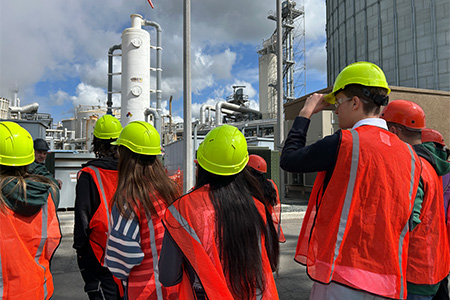
Students participating in a field trip to a local biomass conversion plant in Tulare County, CalGren renewable fuels.
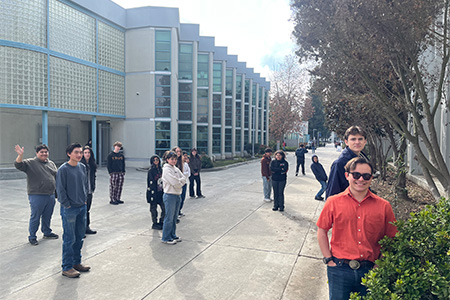
Students engaging in Unit 2: Take a Step If… activity as a class
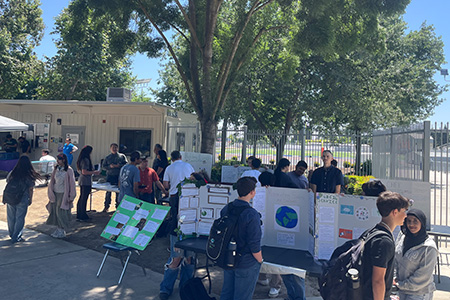
Students participating in a Green Career Fair from Unit 4.
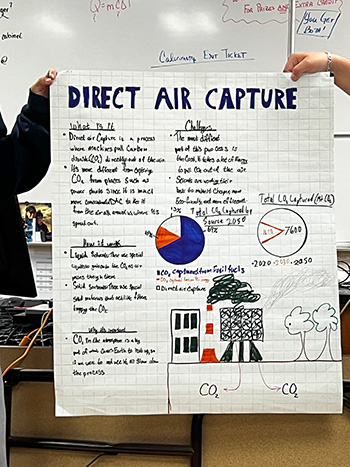
Students presenting their poster about the Direct Air Capture Solution from Roads to Removal.
Tags
Save | Print | Email Article

Related Articles


From time to time CASE receives contributions from guest contributors. The opinions and views expressed by these contributors are not necessarily those of CASE. By publishing these articles CASE does not make any endorsements or statements of support of the author or their contribution, either explicit or implicit. All links to outside sources are subject to CASE’s Disclaimer Policy.