

Engaging Educators with Building Thinking Classrooms in Science K-12
By Tracy McManus
This workshop at the 2025 CASE Conference in Palm Springs used the instructional practices from the book Building Thinking Classrooms in Mathematics K-12: 14 Teaching Practices for Enhancing Learning, and applied them to the science classroom. In this workshop, participants engaged in a thinking task called “Oranges and Balloons” in the role of a student. This task is phenomena based, NGSS aligned, and curriculum agnostic. In visibly random groups, while working on vertical non-permanent surfaces, participants engaged in all 8 science and engineering practices. They asked questions, developed a model, planned an investigation, interpreted data, used computational thinking, constructed explanations, engaged in arguments from evidence, and communicated information to classmates.
The session began with a mini-lesson to establish group norms. Then randomized groups were formed using a deck of cards to continue with modeling a lesson. A phenomena was introduced using a short video, showing how a balloon can be popped with squeezing an orange peel near it. Groups were left to grapple with what science is occurring here, and how to design an investigation to test out their theories. Supplies were provided like in the video, including various types of balloons and various types of citrus. Participants then designed an investigation, used the supplies provided, and recorded their work on their whiteboards. The lesson ended with a consolidation of sharing student work. Participants returned to their seats to discuss the group work they already do, and how they could incorporate these new strategies into their instructional practices. Resources on thinking tasks and a sketchnote of the first three chapters of the book were shared towards the end of the session.
The thinking task had participants engaging with multiple cross-cutting concepts as well. They considered cause and effect, system models, structure and function, and stability and change. By actively participating in the workshop, participants will be able to apply the teaching practices from Building Thinking Classrooms in Mathematics to their science classroom. They experienced working in visibly randomized groups, on vertical non-permanent surfaces, to complete thinking tasks. Participants experienced science instruction from a defronted location in the room, received verbal instructions, and mobilized knowledge among the groups. As the facilitator, I modeled teacher moves and offered options for variation of leadership styles. These practices encourage scientific literacy and equitable outcomes for all students, aligning to the vision and mission of CASE.
This workshop modeled a middle school physical science lesson and provided multiple collaborative opportunities for educators to work together and learn from each other. The teaching practices introduced provided a safe learning environment for students with varying levels of understanding and abilities to thrive. Educators will be able to apply these strategies to any adopted or supplemental curriculum they are currently using.
Building Thinking Classrooms in Science K-12 Slide Deck
1 - Groupmates work together to design an investigation.
2 - A group uses the vertical whiteboard to document thinking and share the work.
3 - Participants gather around a de-fronted classroom for the mini-lesson.
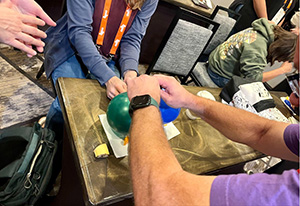
Groupmates work together to design an investigation.
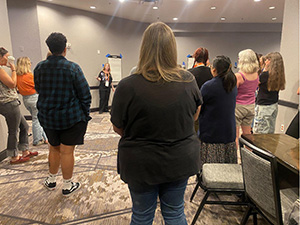
Participants gather around a de-fronted classroom for the mini-lesson.
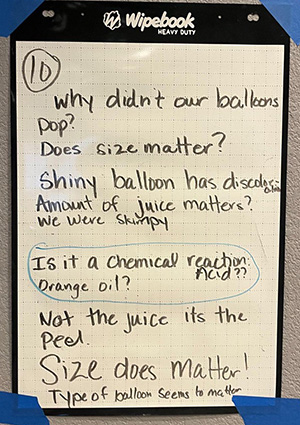
A group uses the vertical whiteboard to document thinking and share the work.
Tags
Save | Print | Email Article

Related Articles


From time to time CASE receives contributions from guest contributors. The opinions and views expressed by these contributors are not necessarily those of CASE. By publishing these articles CASE does not make any endorsements or statements of support of the author or their contribution, either explicit or implicit. All links to outside sources are subject to CASE’s Disclaimer Policy.