

Science That Sticks: Three Simple Shifts That Help Every Learner Thrive
By Jennifer Hunter
In classrooms across the country, the first ten minutes of the day often disappear into routines that check boxes but don’t ignite thinking. Worksheets. Quiet compliance. Tasks students rush through or copy. As I shared in my Science That Sticks session at CSTA, this missed moment is one of the most powerful places to reclaim learning and rebuild a system that too often prioritizes tradition and adult comfort over student curiosity.
But here’s the truth: when we start with wonder, everything changes.
My session at the 2025 CASE Conference offered three core STEM shifts that any educator can adopt tomorrow. These shifts are simple, sustainable, and profoundly effective across grade levels. Most importantly, they create the kind of learning environments every child deserves: places that spark curiosity, honor diverse learning styles, and build real STEM competencies like communication, collaboration, problem-solving, and critical thinking.
Shift #1: Launch With Phenomena and Inquiry
Instead of warm-ups, we begin with authentic phenomena. An image. A video. A real-world moment that makes students stop, notice, and wonder. Inquiry Kickoffs like Classify & Justify, Observation Journals, or Question of the Day transform the first ten minutes into a daily invitation to think, question, and connect. Students step into the role of investigators, not passive receivers of information.
Shift #2: Make Every Station Count
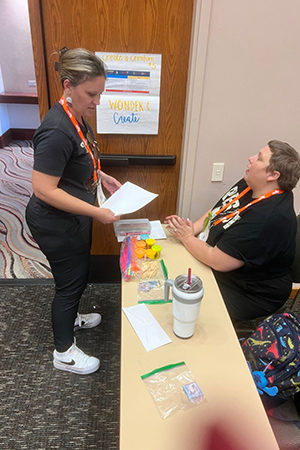
Next, we explored Wonder Stations: Wonder & Observe, Wonder & Create, Wonder & Communicate, Wonder & Decide, Wonder & Redesign, and Wonder & Connect.
These stations weave together science, ELA, and math naturally, giving students the chance to analyze, design, debate, revise, and explain. Cross-curricular learning becomes purposeful, not accidental.
Shift #3: From Themes to Thinking Tasks
Finally, we examined Thinking Tasks that deepen understanding and make student thinking visible. Routines like Read It, Sketch It, Data Detectives, Think-Link Tiles, and Think It. Shape It. Show It. help students build and communicate complex ideas with clarity. These tasks build the competencies required not just for science, but for life.
These shifts remind us that powerful science instruction isn’t about more time, more materials, or more standards. It’s about designing with purpose. It’s about trusting kids as thinkers. And it’s about letting inquiry, not compliance, lead the way.
In a system that often misses the mark, these moves give educators a pathway back to joy, back to curiosity, and back to the heart of why we teach.
If even one teacher leaves ready to start tomorrow’s class with wonder, then change has already begun.
If this approach speaks to you, let’s stay connected. I love collaborating with educators, sharing resources, and designing STEM experiences that help students grow with confidence and curiosity.
Connect with me on Instagram @TheLearningProjectJenn or visit learning-project.com to learn more and access free STEM resources.
Participants engage in Wonder Stations during Science That Sticks at CASE in October 2025.


Tags
Save | Print | Email Article

Related Articles


From time to time CASE receives contributions from guest contributors. The opinions and views expressed by these contributors are not necessarily those of CASE. By publishing these articles CASE does not make any endorsements or statements of support of the author or their contribution, either explicit or implicit. All links to outside sources are subject to CASE’s Disclaimer Policy.